
Gi vs NoGi BJJ: Differences, Popularity & Which Is Better
Discover the key differences between Gi and NoGi Brazilian Jiu-Jitsu, popularity trends, how many people practice each style, and which one is right for you.
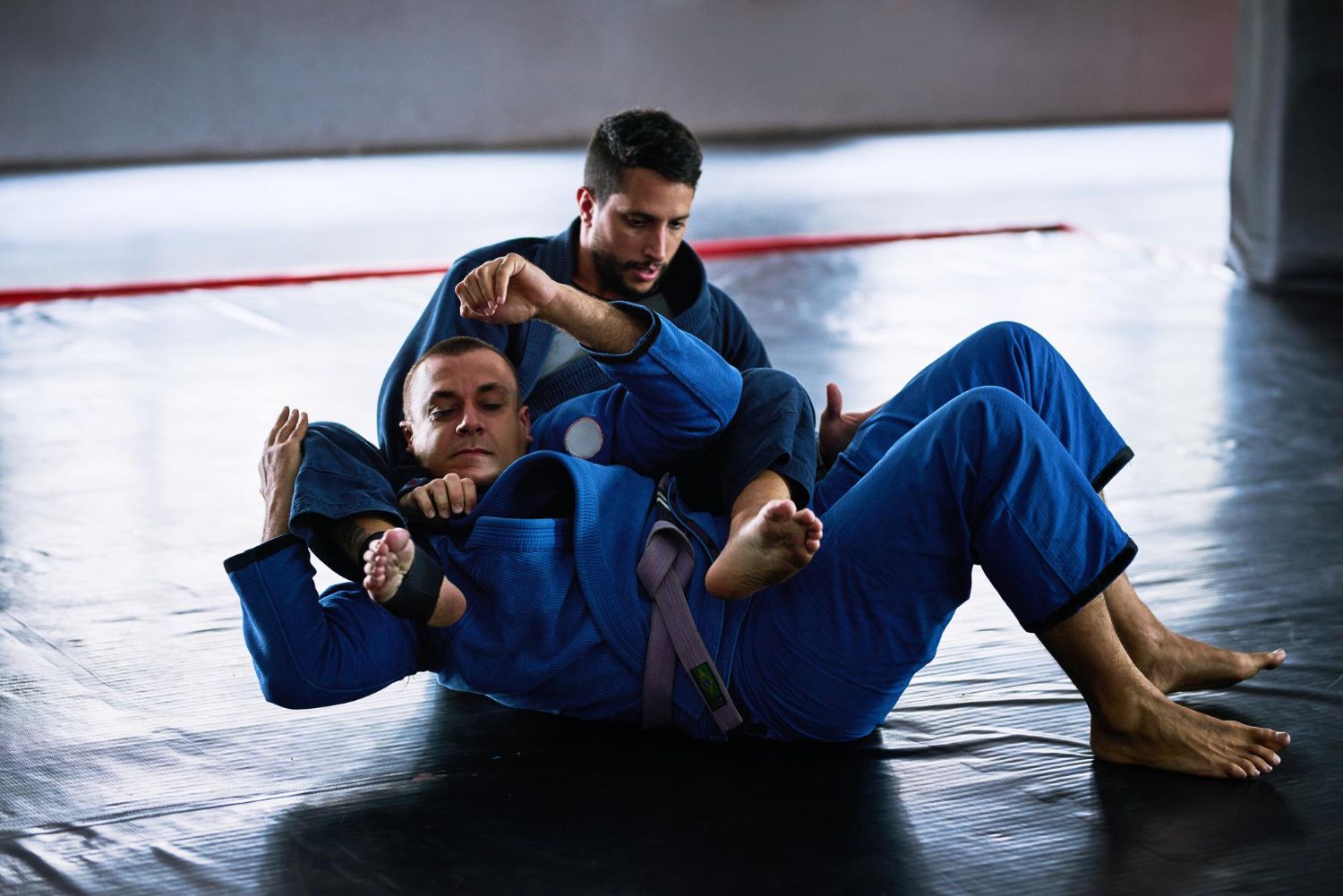
Walk into any BJJ academy and you will see two very different scenes on the mats. On one side, practitioners in heavy cotton kimonos grip each other’s collars and sleeves with precision. On the other, athletes in rash guards and shorts scramble at high speed. They rely on body control and timing, not fabric.
This is the Gi vs NoGi divide. It is one of the most debated topics in Brazilian Jiu-Jitsu.
Whether you are starting BJJ or running an academy, the differences between these two styles matter. Here is everything you need to know.
What Is Gi BJJ?
Gi BJJ is the traditional form of Brazilian Jiu-Jitsu. Practitioners wear a kimono (called the “Gi”). It includes a thick cotton jacket, reinforced pants, and a belt that shows rank.
The Gi becomes a weapon and a weakness at the same time. You can grip your opponent’s collar, sleeves, and pants to control position, set up sweeps, and finish submissions. But your opponent can do the same to you.
This creates a slower, more careful game. Every grip counts.
What Is NoGi BJJ?
NoGi BJJ removes the traditional uniform. Practitioners wear rash guards, shorts, or spats. No one is allowed to grab clothing.
Without fabric to hold, the game changes completely. Grips become body-based: wrists, ankles, necks, underhooks, overhooks, and body locks. The result is a faster style with more scrambles and transitions.
Main Differences Between Gi and NoGi
| Aspect | Gi | NoGi |
|---|---|---|
| Clothing | Heavy cotton kimono with belt | Rash guard, shorts, or spats |
| Grips | Collar, sleeve, and pants grips | Wrists, ankles, underhooks, body locks |
| Pace | Slower and more careful | Faster with more scrambles |
| Friction | High: fabric slows everything down | Low: sweat makes everything slippery |
| Submissions | Collar chokes, lapel guards, spider guard | Heel hooks, leg locks, guillotines, darces |
| Competition rules | More restrictive (IBJJF) | More open (ADCC, CJI) |
| Physical demand | Grip strength, patience, precision | Cardio, explosiveness, agility |
Techniques unique to each style
Gi-specific techniques include collar chokes (cross-collar, loop choke, baseball bat choke), spider guard, lasso guard, worm guard, and other lapel-based systems. The fabric creates dozens of extra control points that do not exist in NoGi.
NoGi-specific techniques rely on leg locks, especially heel hooks. Gi competition has restricted these moves for most of its history. You will also see more guillotines, arm triangles, darces, and body-lock passing systems.
Popularity: Which Is Growing Faster?
Gi BJJ still has more total participants and competitions. But NoGi is the clear growth story in the sport.
NoGi momentum
- The 2025 IBJJF NoGi World Championships drew over 4,000 competitors. That is its biggest turnout ever. Black belt adults alone had a record 257 matches.
- ADCC remains the most prestigious grappling title in the world. It is a NoGi-only event.
- The first Craig Jones Invitational (CJI) pulled roughly 130,000 concurrent live viewers. That is about 6x the viewership of UFC BJJ 4.
- FloSports produced over 200 hours of grappling content for the 2024 ADCC alone.
- New NoGi circuits keep launching. ADCC, CJI, EBI, WNO, and F2W all run active competition series.
Gi still leads in total numbers
Competition records show a split of about 79% Gi to 21% NoGi among top competitors. But that gap is closing every year as NoGi participation grows.
Most modern BJJ academies now offer both Gi and NoGi classes. Many are adding more NoGi sessions to meet rising demand.
How Many People Practice BJJ?
An estimated 5 to 6 million people practice BJJ worldwide.
Here are the numbers:
- United States: roughly 750,000 to 1 million practitioners across more than 10,000 academies.
- US interest in BJJ has doubled in the past 10 years.
- The number of BJJ academies worldwide has grown by 150% over the last decade.
No central registry tracks Gi vs NoGi preference. But the trend is clear. More people train NoGi than ever before. And Gi remains the base at most academies.
Which Is Better: Gi or NoGi?
Everyone wants a straight answer here. The honest one: it depends on your goals.
Choose Gi if you want:
- A slower, more technical game that rewards patience and precision.
- Strong grip strength and defensive awareness.
- A broader range of techniques (everything NoGi has, plus Gi-only moves).
- A traditional path with clear belt progression.
- A style that works at any age and fitness level.
Choose NoGi if you want:
- A faster experience with more scrambles.
- Techniques that transfer directly to MMA and real-world situations.
- A strong cardio workout from the higher pace.
- Access to the growing competition scene with bigger prize pools (ADCC, CJI).
- Lower equipment costs (a rash guard costs less than an $80 to $200 Gi).
What the experts say
John Danaher is one of the most respected BJJ coaches in history. He has argued that the claim “Gi training makes better technical grapplers” is dogma rooted in tradition, not evidence. He now teaches mostly NoGi systems.
Gordon Ryan won multiple ADCC titles. He earned his black belt without training regularly in the Gi. He calls NoGi “the way of the future” and predicts Gi competition in the US will shrink within the next decade.
Many Gracie lineage instructors disagree. They recommend starting with the Gi. Their reasoning: the slower pace and extra grips force you to sharpen your technique. That precision carries over to all areas of grappling.
The real answer
Train both. Most coaches agree that training both styles builds the most complete grappler. The Gi teaches patience and precision. NoGi teaches speed, timing, and adaptability.
If your academy offers both, take advantage of it. If you must pick one, pick the one you enjoy more. Consistency beats everything else in BJJ.
How This Affects Your Academy
If you run a BJJ academy, the Gi vs NoGi trend affects your class schedule, instructor assignments, and student retention.
Students expect NoGi on the schedule. A balanced mix of both styles keeps your mats full. Tracking which classes draw the most attendance tells you what your students want.
With MatGoat, you can track attendance by class type, spot trends in student preferences, and adjust your schedule based on real data.
Final Thoughts
The Gi vs NoGi debate is not going away. That is a good thing. Both styles push Brazilian Jiu-Jitsu forward in different ways.
Gi gives you the chess match: careful, grip-heavy, and rich with technique. NoGi gives you the scramble: fast and explosive.
The best BJJ practitioners and the best academies train both.

BJJ practitioner, blue belt, always eager to keep learning and improving. Software engineer for over 15 years, I founded MatGoat to help BJJ and MMA academies continue growing.


