
Judo Belt Order: Complete Guide to Kyu and Dan Ranks
Learn all judo belt colors in order, from white to red. Requirements, time between ranks, and differences across federations explained.
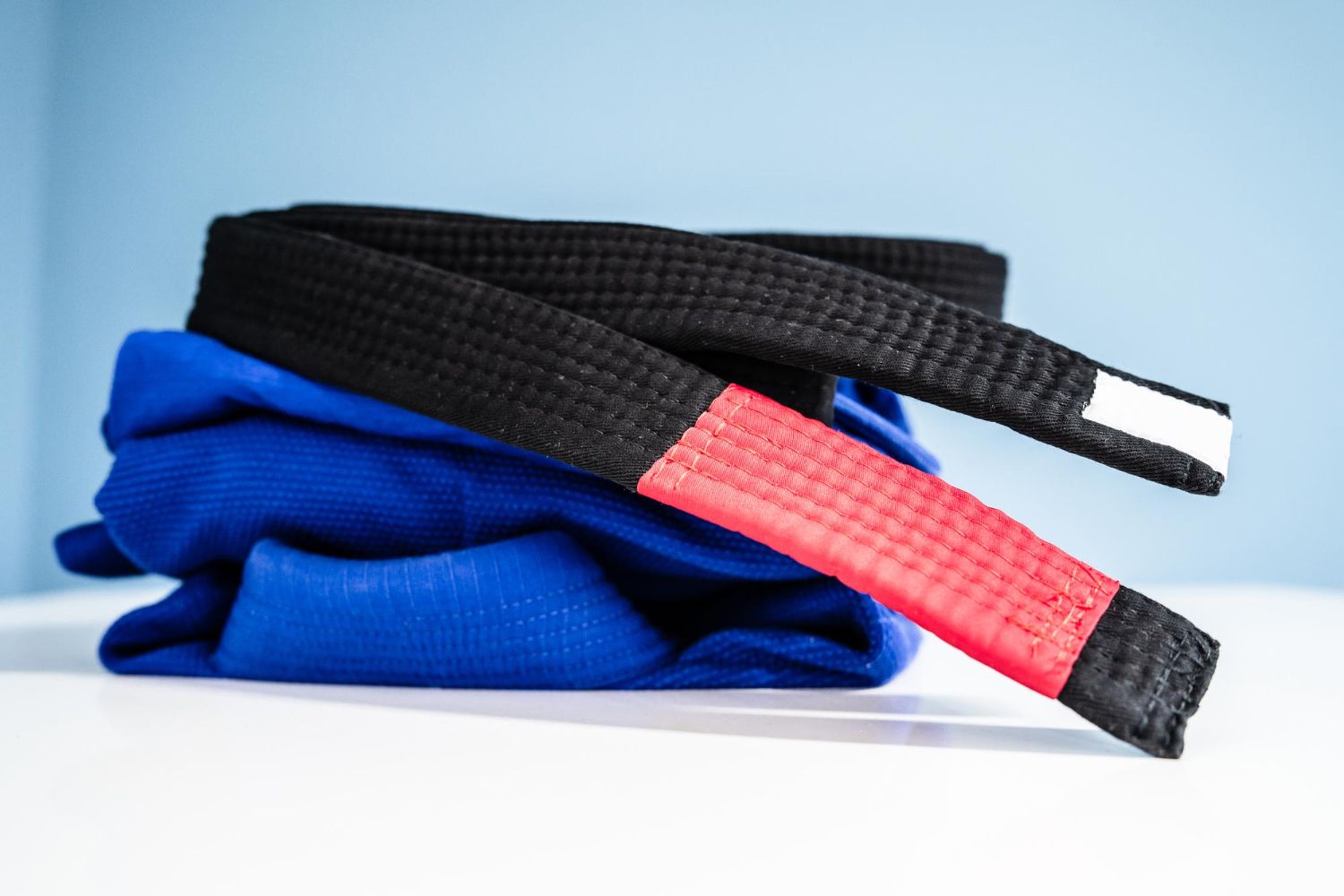
If you’re starting judo or you’re the parent of a child who just enrolled, one of the first questions is: what are the judo belts and what order do they go in? Judo’s ranking system is one of the oldest in martial arts, created by Jigoro Kano in 1882.
Unlike many combat sports, judo’s belt system has a clear structure divided into two main groups: kyu grades (before the black belt) and dan grades (from black belt onward).
Judo Belts in Order (Adults)
The adult belt progression in judo follows this order:
Kyu Grades (Colored Belts)
- White Belt (6th Kyu). The starting point. Every judoka begins here. You’ll learn breakfalls (ukemi), basic postures, and your first throwing techniques.
- Yellow Belt (5th Kyu). First promotion. Shows you’ve mastered fundamental techniques and can do randori (free sparring) safely.
- Orange Belt (4th Kyu). Your technical repertoire grows. The judoka knows several standing techniques (tachi-waza) and ground techniques (ne-waza).
- Green Belt (3rd Kyu). Intermediate level. Fluid transitions between standing and ground work are expected. Greater tactical understanding.
- Blue Belt (2nd Kyu). Advanced pre-black belt level. Broad technical mastery, ability to adapt techniques to different opponents.
- Brown Belt (1st Kyu). The final step before black belt. Deep knowledge of judo, both technical and tactical. Many judokas already compete at high levels.
Dan Grades (Black Belt and Above)
- Black Belt (1st to 5th Dan). The black belt is not the end. It is the real beginning. From 1st to 5th dan, a solid black belt is worn.
- Red and White Belt (6th to 8th Dan). Reserved for judokas with decades of experience and dedication to judo. Alternating red and white panels.
- Red Belt (9th and 10th Dan). The highest rank. Only 15 people in history have received the 10th dan, all posthumously or in advanced age. It represents an entire life dedicated to judo.
Judo Belts for Children
Children have a more detailed belt system to keep motivation high with more frequent promotions. The intermediate colors vary by country and federation, but typically include combinations such as:
- White.
- White-yellow.
- Yellow.
- Yellow-orange.
- Orange.
- Orange-green.
- Green.
- Green-blue.
- Blue.
From age 15-16 (depending on the federation), judokas transition to the adult system and can test for brown and black belts.
How Long Does Each Belt Take?
Times vary by federation, training frequency, and the student’s ability. As a general reference:
- White to Yellow. 3-6 months.
- Yellow to Orange. 6-12 months.
- Orange to Green. 6-12 months.
- Green to Blue. 12-18 months.
- Blue to Brown. 12-24 months.
- Brown to Black (1st Dan). 12-24 months.
In total, most practitioners take between 5 and 8 years to earn their black belt, training consistently 3-4 times per week. There are exceptions. Elite competitors often achieve it faster. Recreational practitioners may take longer.
Requirements for Promotions
Each federation has its own criteria, but the most common requirements include:
- Minimum time at the previous rank. Most federations require a minimum period between promotions.
- Regular attendance. A minimum training frequency is expected.
- Technical examination. Demonstration of the syllabus techniques (nage-waza, katame-waza and, at higher ranks, kata).
- Competition. Some federations require competition results for certain grades, especially 1st to 3rd dan.
- Theoretical knowledge. Judo history, Japanese terminology, and rules of the sport.
Differences Between Federations
Not all federations use exactly the same system:
- IJF (International Judo Federation). Sets general guidelines but leaves details to national federations.
- France (FFJDA). One of the largest federations in the world. Has highly structured requirements with competition points (shiai) and technical demonstration (kata).
- Japan (AJJF/Kodokan). The original system. Exams focus more on technique and kata. Does not include a blue belt for adults (they go directly from green to brown).
- United States (USA Judo). Follows a system similar to the European model with six colored belts before black.
- United Kingdom (BJA). Well-established system with structured gradings. The Mon grade system is used for juniors.
Fun Facts About the Belt System
- Jigoro Kano introduced the first belt system in martial arts in 1886. Before that, only white and black existed.
- The intermediate colors were added in Europe in the 1930s to make it easier to identify levels.
- The tradition of never washing your belt is a myth — there’s no formal rule about this.
- In judo, the black belt is considered an “advanced beginner”, not a master.
How to Manage Gradings at Your Dojo
If you run a judo academy, managing the kyu and dan system can be a challenge. Each student progresses at their own pace, federations have different requirements, and with dozens of students it’s easy to lose track.
Tools like MatGoat let you configure your federation’s grading system, record exams, and automatically track each judoka’s progression — so you can focus on teaching instead of managing spreadsheets.

BJJ practitioner, blue belt, always eager to keep learning and improving. Software engineer for over 15 years, I founded MatGoat to help BJJ and MMA academies continue growing.


