
How to Start a BJJ Academy: Complete Guide
Everything you need to know to open your own Brazilian Jiu-Jitsu academy: from the business plan to your first 100 students. A practical and realistic guide.
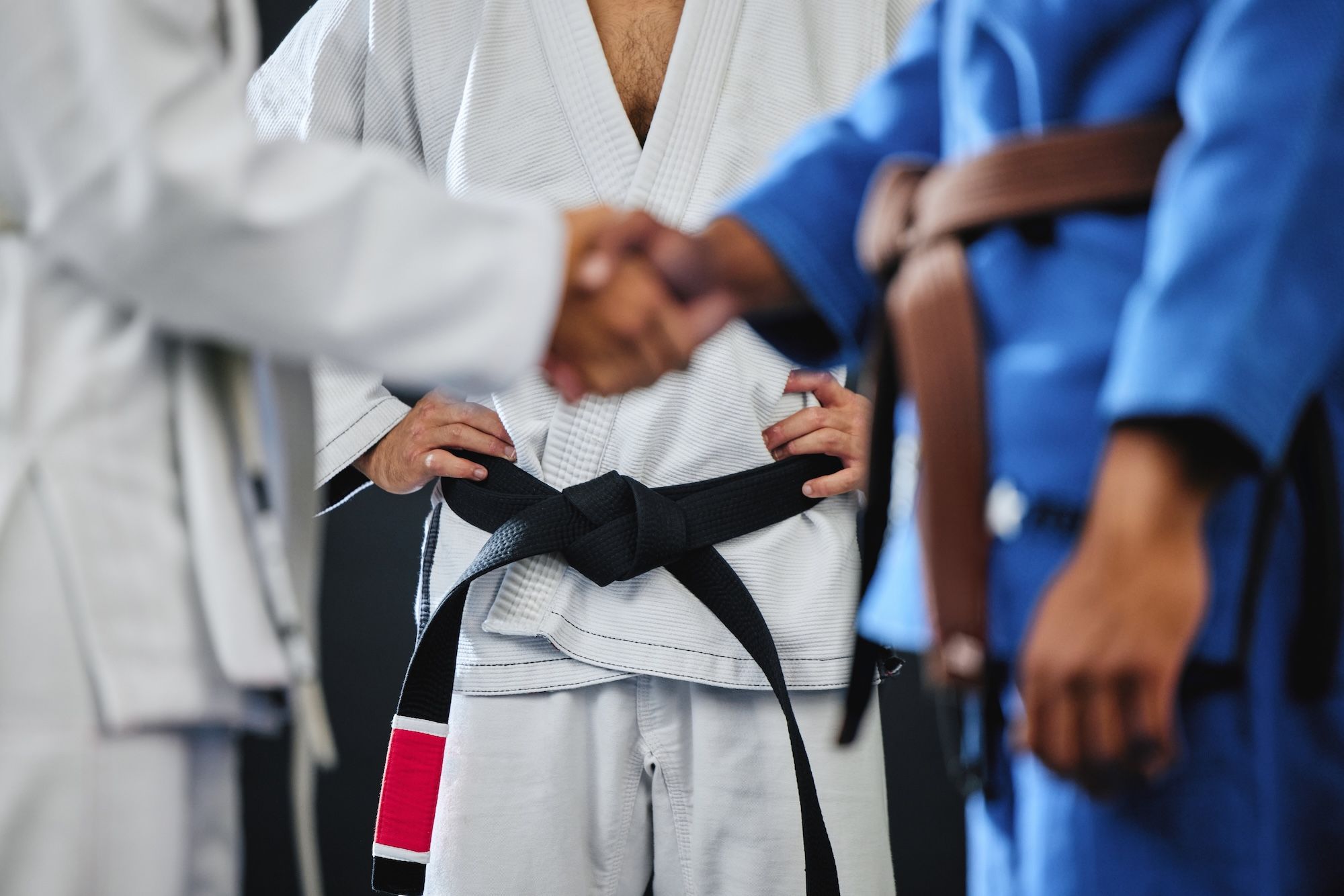
Starting a BJJ academy is the dream of many athletes. Turning your passion for Jiu-Jitsu into your way of life sounds incredible, and it can be. But it’s also a business, and as such, it requires planning, investment, and systems that work.
This guide takes you from your dream to your first hundred students. Without unnecessary romanticism, but with all the optimism such a project deserves.
Table of Contents
- Are You Ready to Start an Academy?
- The Business Plan: Numbers You Need to Know
- Finding and Setting Up Your Space
- Legal and Administrative Requirements
- Designing Your Offer: Programs and Pricing
- Your First Class Schedule
- Management Systems from Day One
- Attracting Your First Students
- Retention: The Art of Keeping Them
- The First 12 Months: What to Expect
- Common Mistakes and How to Avoid Them
Are You Ready to Start an Academy?
Before looking for a location or designing logos, ask yourself these questions.
Questions you should answer with a “yes”
About your technical level:
- Are you a brown or black belt? (It’s not impossible with purple, but it’s harder).
- Do you have teaching experience, not just training?
- Have you competed or at least understand the competition world?
- Can you explain techniques clearly to different types of people?
About your financial situation:
- Do you have savings for 12 months of personal + business expenses?
- Can you afford to earn no money (or very little) for 1-2 years?
- Do you have a clear source for your initial investment?
About your mindset:
- Are you willing to work 60+ hours per week in the first years?
- Can you handle the uncertainty of not knowing how much you’ll earn each month?
- Do you see yourself doing this in 10 years?
About your network:
- Do you have contacts in the BJJ world who can help you?
- Do you know potential students who would come with you?
- Do you have mentors (other academy owners) who can advise you?
Signs that you might NOT be ready
Don’t get discouraged if the answer is no to some of these questions, it just means there’s more work to do. The key is that it shouldn’t be as simple as:
- Your only motivation is “not having a boss”.
- Expecting to be profitable from month 1.
- Not having any potential students identified.
- Your partner/family doesn’t support the project.
The myth of the “black belt entrepreneur”
Being a good BJJ athlete doesn’t make you a good business owner. The skills needed to run your academy are similar but more focused on the business and entrepreneurship side.
But like everything in BJJ, it’s a matter of learning. This guide is a first step.
The Business Plan: Numbers You Need to Know
Romanticism doesn’t pay the rent. Let’s get into the numbers.
Estimated initial investment (US, medium-sized city)
| Concept | Range | Notes |
|---|---|---|
| Deposit + first months rent | $4,000-12,000 | Depending on the location |
| Mats (1,000-1,600 sq ft) | $5,000-10,000 | New vs used |
| Basic conditioning | $3,000-7,000 | Paint, changing rooms, lighting |
| Initial equipment | $1,500-3,000 | Dummies, teaching materials |
| Launch marketing | $500-2,000 | Website, social media, signage |
| Licenses and insurance | $1,000-3,000 | Varies by state and city |
| Management software | $35-100/month | From day one (trust me) |
| Safety cushion | $7,000-15,000 | For unexpected expenses |
| TOTAL ESTIMATED | $25,000-55,000 | Realistic range |
Important note: These numbers are indicative for a medium-sized US city. Costs can vary dramatically by region — a space in New York or Los Angeles may cost 2-3x more than in a smaller metro area.
Monthly recurring expenses
| Concept | Monthly range |
|---|---|
| Location rent | $1,000-2,500 |
| Utilities (electricity, water) | $150-400 |
| Liability insurance | $100-300 |
| Management software | $35-100 |
| Ongoing marketing | $100-300 |
| Cleaning | $150-300 |
| Maintenance | $50-150 |
| Accounting/advisory | $100-250 |
| TOTAL MONTHLY BASE | $1,700-4,300 |
This is BEFORE paying yourself. Your academy needs to cover these expenses before you see a dollar of profit.
The break-even point
Simple formula:
Students needed = Monthly expenses ÷ Average feeExample:
- Monthly expenses: $3,000.
- Average fee: $130.
- Students needed: 3,000 ÷ 130 = 23 students.
But wait, this only covers academy expenses. To live off this:
Students to live = (Academy expenses + Your desired salary) ÷ Average feeRealistic example:
- Academy expenses: $3,000.
- Minimum salary you need: $3,500.
- Total to cover: $6,500.
- Average fee: $130.
- Students needed: 6,500 ÷ 130 = 50 students.
Conclusion: You need approximately 50-60 students to start living off your academy in a basic way.
How long will it take to get there?
Be realistic:
| Scenario | Time to 50 students |
|---|---|
| Optimistic (good marketing, no competition zone) | 6-9 months |
| Realistic (consistent effort, some competition) | 12-18 months |
| Conservative (saturated zone, limited marketing) | 18-24 months |
Plan for the conservative scenario. If it goes better, great. If not, keep working.
Finding and Setting Up Your Space
The location is your biggest fixed cost. Choosing well is crucial.
Characteristics of the ideal location
Recommended minimum size:
- Mat area: 850-1,600 sq ft (ideal: 1,000+ sq ft).
- Changing rooms: 150-270 sq ft.
- Reception/waiting area: 100-160 sq ft.
- Storage: 50-100 sq ft.
- Total minimum recommended: 1,200-1,600 sq ft.
Free tool: Use our tatami capacity calculator to figure out how many students fit in your space by class type.
Technical requirements:
- Minimum height: 9-10 ft (important for throws and standing work).
- Resistant flooring (the mats are heavy).
- Good ventilation (BJJ generates a lot of heat and humidity as you know).
- Water access for changing rooms.
- Adequate electrical installation.
Location:
- Accessible by public transport or with parking nearby.
- Area with foot traffic (helps with visibility).
- Not too close to direct competition.
- Neighborhood with your target audience (families if you do kids, young professionals if you focus on adults).
What many forget
Noise: BJJ is not silent. Falls, instructions, music… Confirm you can make noise without problems with neighbors.
Hours: You’ll need to stay open until 9-10pm on weekdays. Check location or community restrictions.
Growth: Is there room to expand if things go well? Adjacent space available?
Hidden competition: Investigate if there are academies nearby that don’t show up on Google. Local word of mouth is important.
The mats: your biggest equipment investment
Options:
| Type | Price (1,000 sq ft) | Pros | Cons |
|---|---|---|---|
| Basic EVA puzzle | $2,500-4,000 | Economical, easy to install | Less durable, joints open up |
| Premium EVA puzzle | $4,500-6,500 | Good value for money | Still puzzle format |
| Roll-out mats | $5,000-8,000 | Professional, no joints | More expensive, complex installation |
| Competition mats | $7,000-12,000 | Maximum quality | Price, perhaps excessive to start |
Recommendation for starting: Medium-high quality EVA puzzle (1-1.5 inches thick). You can upgrade to Zebra or Fuji mats when you grow.
Recommended thickness: Minimum 1 inch, ideal 1.5 inches for impact absorption.
Conditioning budget
| Element | Range | Priority |
|---|---|---|
| Mats | $4,000-8,000 | Essential |
| Paint/walls | $400-1,000 | High |
| LED lighting | $300-700 | High |
| Mirror (optional) | $300-600 | Medium |
| Basic changing rooms | $700-2,000 | Essential |
| Sound system | $150-400 | Medium |
| Air conditioning/heating | $700-3,000 | Depends on location |
| Exterior signage | $300-700 | High |
Legal and Administrative Requirements
This isn’t the most exciting part, but skipping it can cost you dearly.
Legal structure
Common options in the US:
| Form | Pros | Cons | Recommended for |
|---|---|---|---|
| Sole Proprietorship | Simple, cheap, fast | Unlimited liability | Starting alone, testing |
| LLC (Limited Liability Company) | Limited liability, more professional | More expensive, more paperwork | When billing +$50k/year |
Our recommendation: Start as a sole proprietor or single-member LLC. When you’re consistently billing more than $50,000/year, make sure you have an LLC and consider an S-Corp election for tax benefits.
You can also form a nonprofit, but that limits your ability to take profits.
Licenses and permits
Essential:
- Business registration (state and local).
- Business license and zoning permit (City/County).
- Varies greatly by city and state.
- Can take 1-3 months.
- Cost: $300-1,500.
- General liability insurance.
- Minimum $1,000,000 coverage.
- Cost: $1,000-3,000/year.
- Waivers and legal compliance.
- Liability waivers for all members.
- Privacy policy.
- Parental consent forms (especially for minors).
Rental contract: important clauses
Negotiate these points before signing:
- Minimum duration: Try for 3-5 years with extension option.
- Grace period: Ask for 1-2 months without payment for conditioning.
- Permitted works: That they allow you to install mats, changing rooms, etc.
- Subletting: In case you want to share costs with another activity.
- Early exit: Conditions if you need to close before time.
Designing Your Offer: Programs and Pricing
Your offer defines your business. Keep it simple at the beginning.
Recommended programs to start
Minimum viable (starting):
- BJJ Adults.
- BJJ Kids (if there’s demand in your area).
Second step (3-6 months later):
- No-Gi / Grappling.
- Private classes.
Later on (when you have a base):
- Competition program.
- Specific classes (women, masters 35+).
Pricing structures that work
Simple model (recommended for starting):
| Plan | Price | Includes |
|---|---|---|
| 2 days/week | $100/month | Access to 2 weekly classes |
| Unlimited | $150/month | Access to all classes |
| Kids | $80/month | Kids program |
Why start simple:
- Easy to explain and sell.
- Less administration.
- You can add complexity when you better understand your students.
To dive deeper into pricing and billing strategies, check our Payments and Billing Guide for BJJ Academies.
Pricing: how to decide?
Research your market:
- How much do other BJJ academies in your area charge?
- How much do CrossFit, boxing gyms, etc. charge?
- What’s the economic level of your neighborhood/city?
Positioning:
| Position | Relative price | Implies |
|---|---|---|
| Premium | +20% vs competition | Top facilities, personalized attention |
| Market | Similar to competition | Compete on other factors |
| Economic | -20% vs competition | Volume, less margin |
Recommendation: Start in the middle range of the market. It’s easier to lower prices than raise them.
Launch promotions
What works:
- First week free (no commitment).
- Enrollment discount for the first 2-3 months.
- Gi included with annual enrollment.
What does NOT work:
- Permanent discounts that devalue your service.
- Eternal “launch prices”.
- Giving everything away.
Your First Class Schedule
Your schedule is your product. Designing it well is critical.
Minimum viable schedule
For starting (just you teaching):
| Time | Monday | Tuesday | Wednesday | Thursday | Friday | Saturday |
|---|---|---|---|---|---|---|
| 12:00-13:00 | - | Adults | - | Adults | - | - |
| 18:00-19:00 | Kids | - | Kids | - | - | Kids |
| 19:30-21:00 | Adults | Adults | Adults | Adults | Open Mat | - |
Total: 9-10 hours of classes per week
This schedule:
- Covers key time slots (midday for professionals, afternoon for kids, evening for most).
- Is sustainable for one person.
- Leaves room to grow.
For more details on how to structure and optimize your schedule, check our Class Scheduling Guide. Need help designing your initial schedule? Try our free Class Schedule Generator to visualize different configurations before launch.
Time slots and their profiles
Early morning (6:00-8:00):
- Professionals before work.
- High loyalty if you offer it.
- Consider adding when you have clear demand.
Midday (12:00-14:00):
- Remote workers, freelancers.
- Shorter classes (45-60 min).
- Small but loyal group.
Afternoon (16:00-18:00):
- Kids after school.
- Natural transition to adults after.
Evening (19:00-21:30):
- Highest demand.
- Where to concentrate efforts at the beginning.
Weekend:
- Saturday open mat is almost mandatory.
- Saturday morning kids classes work very well.
- Sunday closed (you need rest).
Typical class structure
| Block | Duration | Content |
|---|---|---|
| Warm-up | 10-15 min | BJJ-specific mobility |
| Technique | 25-30 min | Demonstration + partner practice |
| Drilling | 10-15 min | Repetition of the day’s technique |
| Sparring | 15-20 min | 5-minute rolls |
| Closing | 5 min | Questions, announcements |
Total: 60-90 minutes (adapt according to your schedule and class type)
Management Systems from Day One
This is the advice I wish I had received before: implement systems that help you from day one, not when you’re already overwhelmed.
What you need to manage
- Students: Who they are, when they started, what they pay, what belt they have.
- Attendance: Who comes to which classes, trends.
- Payments: Who has paid, who owes, when to charge.
- Communication: Announcements, schedule changes, personal follow-up.
- Promotions: Belt criteria, each student’s history.
To dive deeper into student tracking and promotions, check our Student Tracking Guide.
Why Excel/WhatsApp don’t scale well
Week 1 with 5 students: “Easy, I’ll keep it in a notebook”
Month 3 with 25 students: “Okay, I need a spreadsheet”
Month 6 with 45 students:
- Student spreadsheet with 15 columns nobody understands.
- Chaotic WhatsApp group with 200 daily messages.
- Charging manually and always forgetting someone.
- You don’t know who hasn’t come in 2 weeks.
Month 12 with 70 students: You’re working for your spreadsheet, not for your students.
The minimum system needed
From day 1, you need:
| Function | Minimum | Ideal |
|---|---|---|
| Student database | Spreadsheet | Specialized software |
| Attendance control | Sign-in sheet | Digital check-in |
| Billing | Manual transfer | Automated direct debit |
| Communication | Email + WhatsApp | Centralized system |
Not sure where to start? Our free Student Tracking Template is a ready-made spreadsheet with attendance, belt progression, and payment tracking built in.
Management software: why invest from the start?
Specialized software for BJJ academies gives you:
- Automated billing: It charges automatically, without you having to chase anyone.
- Real attendance control: You know who comes and who doesn’t without counting heads.
- Progress tracking: Each student’s history for fair promotions.
- Efficient communication: Segmented messages without group chaos.
- Time savings: 10-15 hours monthly that you dedicate to teaching, not administrating.
The cost: $35-100/month
What you save: Your time, your energy, students who don’t “get lost”
Platforms like MatGoat are designed specifically for martial arts academies—they’re not generic fitness gyms adapted. This means they understand concepts like belts, stripes, differentiated programs, and the particularities of our community.
Gradual implementation
Week 1-2: The basics
- Add all students to the system.
- Configure programs and prices.
- Set up class schedule.
Week 3-4: Payments
- Migrate to automated billing (ACH direct debit or card).
- Set up payment reminders.
Month 2: Attendance
- Digital check-in for each class.
- Start using data for decisions.
Month 3+: Communication
- Automatic welcome messages.
- Inactivity alerts.
- Parent communication (if you have a kids program).
Attracting Your First Students
You have the location, the system, the schedule. Now you need students.
The acquisition funnel
AWARENESS (they discover you)
        ↓
INTEREST (they want to know more)
        ↓
TRIAL (they come to a class)
        ↓
ENROLLMENT (they sign up)
        ↓
RETENTION (they stay)
        ↓
REFERRALS (they bring friends)
Acquisition channels by effectiveness
Tier 1: High impact, low cost
| Channel | What to do | Cost |
|---|---|---|
| Initial word of mouth | Invite everyone you know who ever said “I’d like to try BJJ” | Free |
| Google Business | Optimized profile with photos, hours, reviews | Free |
| Organic Instagram | Consistent content (techniques, community, transformations) | Your time |
Tier 2: Medium impact, variable cost
| Channel | What to do | Cost |
|---|---|---|
| Facebook/Instagram Ads | Ads segmented by location and interests | $200-500/month |
| Local events | Demonstrations at fairs, schools | Your time + materials |
| Collaborations | Local CrossFit, sports stores | Varies |
Tier 3: Long term
| Channel | What to do | Cost |
|---|---|---|
| Local SEO | Website optimized for “BJJ + your city” | Your time or $100-300/month |
| Educational content | Blog, YouTube with value for beginners | Your time |
The perfect trial class
The trial class is where you win or lose the student.
Before they come:
- Respond quickly to their inquiry (less than 2 hours).
- Send confirmation with: what to bring, where to park, what to expect.
- Confirm attendance the day before.
When they arrive:
- Greet them personally (don’t delegate to anyone).
- Brief tour of facilities.
- Introduce them to 2-3 friendly current students.
- Adapt intensity to their level (they should leave alive and wanting more).
After the class:
- Brief conversation: “What did you think? Any questions?”
- Explain options without pressure.
- If they don’t sign up, invite them to try again.
- Follow-up the next day if no response.
Goal: They leave thinking “this is for me” and “these people are nice”
Referral program from day 1
Your first students are your best advertising.
Simple structure:
| Action | Reward |
|---|---|
| Bring a friend who tries | Public acknowledgment |
| Friend signs up | 1 month free or discount |
| 3+ referrals in the year | Special gift (academy rashguard) |
How to promote it:
- Mention it in class (“If you know anyone who wants to try…”).
- Physical referral cards for them to carry.
- Quarterly email reminder.
Retention: The Art of Keeping Them
Acquiring costs money. Retaining builds your business.
The retention numbers
Typical acquisition cost: $100-250 per new student (between marketing, time, discounts).
Value of a student: If they pay $130/month and stay 18 months = $2,340
The math is clear: Retaining 1 student = Acquiring 1 new student (or more, considering the effort)
Why students quit
| Reason | % of dropouts | Preventable? |
|---|---|---|
| Schedule incompatibility | 23% | Partially |
| Lack of perceived progress | 21% | Yes |
| Not feeling part of the group | 19% | Yes |
| Economic problems | 15% | Partially |
| Injuries | 12% | Partially |
| Moving | 10% | No |
40% of dropouts are avoidable with good management.
Signs that a student is going to quit
Learn to detect them before it’s too late:
- Reduced attendance: Went from 3x/week to 1x/week.
- Change in usual schedule: No longer comes to their usual class.
- Less interaction: Arrives just in time, leaves quickly, doesn’t talk to anyone.
- Subtle complaints: “I don’t know if this is for me”, “I’m very busy”.
Early warning system
With good management software, you can set up alerts:
- 7 days without coming: Friendly message (“We miss you, everything okay?”).
- 14 days: Personal contact (WhatsApp or call).
- 21 days: Direct conversation, offer options (pause, different schedule).
- 30 days: Last chance before cancellation.
Without a system: These students simply disappear and you find out when you stop charging them.
Building community: your best retention
Students who have friends on the mat quit much less.
How to encourage it:
- Partner rotation: Everyone trains with everyone.
- Social events: Monthly dinner, watching UFC together.
- Open mat: Informal space for them to get to know each other.
- Celebrations: Graduations, birthdays, milestones.
The magic metric: If each student has at least 3 “mat friends”, their probability of staying skyrockets.
For more retention and community-building strategies, check our Communication and Community Guide.
Communication that retains
Automated messages you should have:
- Welcome (day 0): What to expect, how to prepare.
- Post first class (day 1): “How was it?”
- First week (day 7): Tips for beginners.
- First month (day 30): Check-in, event invitation.
- Milestones: 10 classes, 50 classes, each stripe/belt.
What NOT to automate:
- Responses to complaints.
- Conversations about late payments.
- Congratulations for important achievements.
The First 12 Months: What to Expect
Realistic expectations so you don’t get frustrated.
Month 1-3: Survival
Goals:
- 10-20 students.
- Establish class routine.
- Fine-tune schedule according to real demand.
- First Google reviews.
Reality:
- Classes with 2-5 people (normal).
- Lots of “empty” time you use for marketing.
- Constant doubts (“Am I doing this right?”).
- Income well below expenses.
Your job: Give the best possible classes to whoever comes, even if it’s just one.
Month 4-6: Traction
Goals:
- 25-35 students.
- First organic referrals.
- Identify strong and weak schedules.
- Payment system running smoothly.
Reality:
- You start seeing repeated faces (good!).
- Some painful dropouts.
- Maybe your first occasional assistant.
- Still not paying yourself a decent salary.
Your job: Systematize everything you can. What you do manually today will drown you tomorrow.
Month 7-9: Consolidation
Goals:
- 40-50 students.
- Break-even point (covering expenses).
- Identifiable community.
- First belt promotions.
Reality:
- Evening classes fill up, daytime ones not so much.
- You have enough data to make decisions.
- Some students are now “veterans” who help newcomers.
- You start feeling this could work.
Your job: Optimize. Adjust schedules, improve retention, think about kids program if you don’t have one.
Month 10-12: Professionalization
Goals:
- 50-70 students.
- First real income for yourself.
- Documented processes.
- Possibly regular assistant instructor.
Reality:
- Not everything depends on you every second anymore.
- You have students who’ve been there almost a year (retention!).
- You know your business: what works, what doesn’t.
- Plans for year 2.
Your job: Delegate what you can. Think strategically.
KPIs to track month by month
| Metric | How to calculate | Year 1 goal |
|---|---|---|
| Active students | Those who came in the last 30 days | Growing |
| Retention rate | Students who renew ÷ Total | 90%+ monthly |
| Conversion rate | Enrollments ÷ Trials | 50%+ |
| Average attendance | Attendances ÷ Students | 8-10 classes/month |
| Recurring revenue | Sum of monthly fees | Covering expenses by month 6-9 |
Common Mistakes and How to Avoid Them
Learn from others’ mistakes.
Mistake 1: Not having systems from the start
The mistake: “I’ll systematize when I grow”
The reality: When you grow, you won’t have time. And bad habits will already be established.
The solution: Implement management software from day 1. The cost is minimal compared to the time you save.
Mistake 2: Competing only on price
The mistake: “I’ll be the cheapest to attract more students”
The reality: You attract those who only look for price, not value. They’ll leave for the next cheap option.
The solution: Compete on experience, community, teaching quality. Price is just one factor.
Mistake 3: Neglecting retention for acquisition
The mistake: Obsessing over new students while current ones leave through the back door.
The reality: Acquiring costs 5-10x more than retaining.
The solution: Dedicate at least as much effort to retaining as to acquiring. Measure retention.
Mistake 4: Not separating personal and business finances
The mistake: Everything goes to the same account, you take money when you need it.
The reality: You don’t know if your business is profitable or if you’re eating through savings.
The solution: Separate bank account. Pay yourself a fixed “salary” (even if small at first).
Mistake 5: Wanting to do everything alone
The mistake: “Nobody will do it as well as me”
The reality: You’ll burn out. And the business can’t grow if it depends 100% on you.
The solution: Train an assistant from when you have 30-40 students. Delegate progressively.
Mistake 6: Ignoring the kids program
The mistake: “I only want to teach adults”
The reality: The kids program can be 30-50% of your income. And parents are excellent promoters.
The solution: Seriously consider a kids program from month 3-6.
Mistake 7: Not investing in marketing
The mistake: “Word of mouth is enough”
The reality: Word of mouth is slow. You need to accelerate, especially at the beginning.
The solution: Dedicate 5-10% of your income to marketing. Google Business + social media + some advertising.
Mistake 8: Belt promotions without clear criteria
The mistake: Promoting “when you feel it” or “by time”
The reality: Creates frustrations, comparisons, sense of injustice.
The solution: Clear and communicated criteria: minimum attendance + technical evaluation.
Resources and Next Steps
Launch checklist
3 months before:
- Basic business plan with numbers.
- Location search.
- Competition research.
- Sufficient savings or secured financing.
2 months before:
- Location signed.
- Licenses in process.
- Mat order placed.
- Basic brand design (logo, colors).
1 month before:
- Location conditioning.
- Self-employment/company registration.
- Insurance contracted.
- Management software configured.
- Basic website online.
- Social media active.
Launch week:
- Opening event.
- First classes scheduled.
- Payment system working.
- Professional photos of the space.
Recommended tools
| Need | Tool | Approximate cost |
|---|---|---|
| Integral management | MatGoat | $35-100/month |
| Website | WordPress/Squarespace | $0-20/month |
| Email marketing | Mailchimp | Free up to 500 contacts |
| Design | Canva | Free/$13/month |
| Accounting | Local CPA/bookkeeper | $100-250/month |
Community and learning
- Other owners: Your best resource. Find mentors who have already walked the path.
- Local federation: Connections, events, visibility.
- Industry events: IBJJF, seminars, networking.
Conclusion: The Journey Is Worth It
Starting a BJJ academy is not easy. It requires investment, time, sacrifice, and high tolerance for uncertainty.
But it’s also incredibly rewarding:
- Seeing a student achieve their first belt.
- Building a community that supports each other.
- Living from your passion.
- Positively impacting people’s lives.
The path from starting an academy from scratch takes 2-3 years of intense work. The first 12 months are the hardest. But if you start with that excitement, with systems from the beginning, and with patience to build something lasting, you’re going to make it.
And when you do, you’ll understand why so many before you took this same path.
Oss
Related Guides
- The Complete Guide to BJJ Gym Management
- Payments and Billing Guide for BJJ Academies
- Class Scheduling Guide
- Communication and Community Guide
- Student Tracking Guide
This guide is part of the MatGoat Academy Management Series. For more resources on how to run a successful BJJ academy, explore our other guides.

BJJ practitioner, blue belt, always eager to keep learning and improving. Software engineer for over 15 years, I founded MatGoat to help BJJ and MMA academies continue growing.