
The Most Important Brazilian Jiu-Jitsu Competitions
A complete breakdown of the tournaments that define BJJ: IBJJF Worlds, ADCC, Abu Dhabi World Pro, CJI, and more. Statistics, records, prize money, and trends.
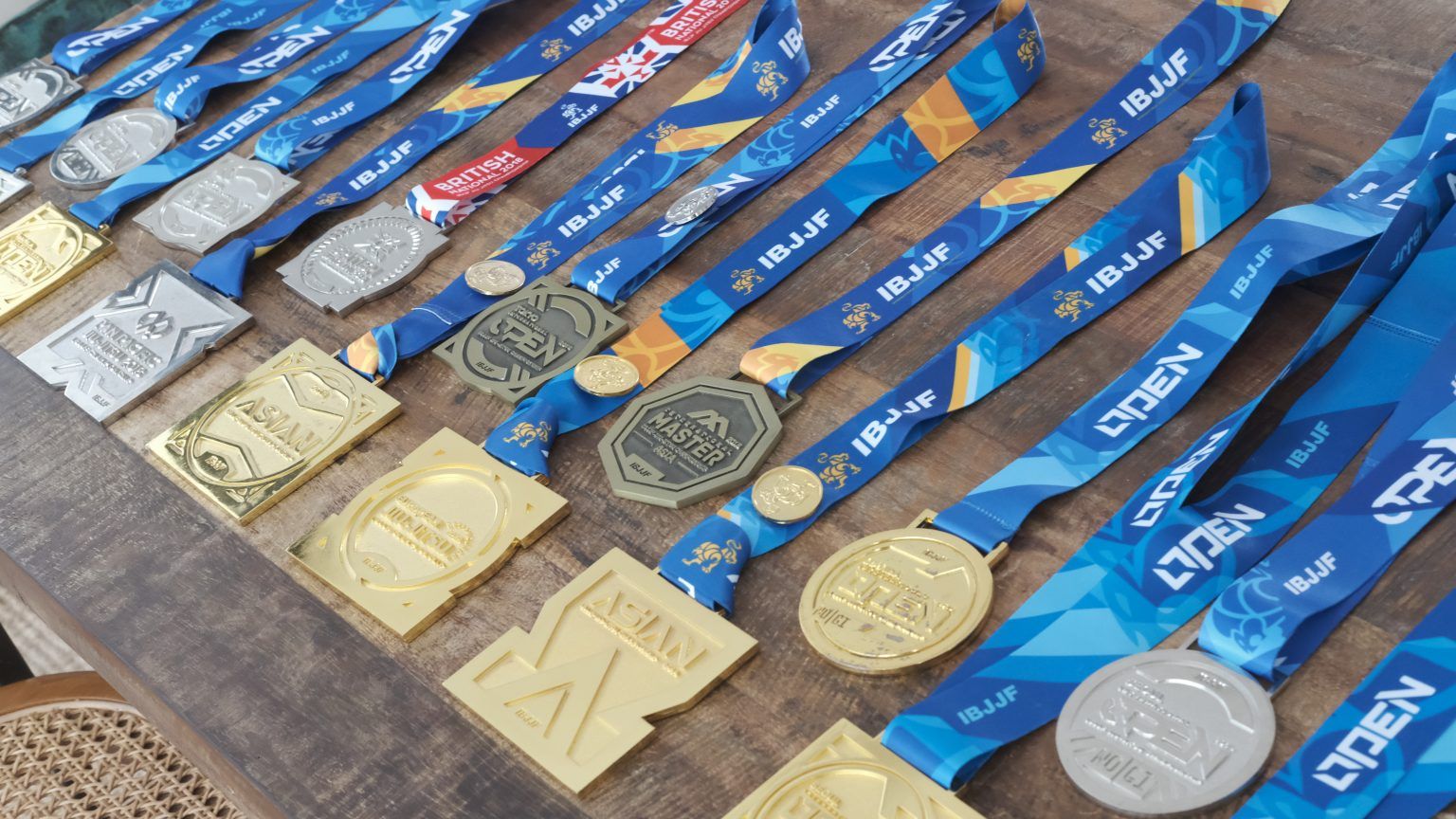
Brazilian Jiu-Jitsu has evolved from a family martial art practiced in Rio de Janeiro academies into a global sport with over 6 million practitioners worldwide and a competitive ecosystem generating millions of dollars in prize money. Brazil continues to dominate with an estimated 70–80% of gold medals in major gi competitions, but the rise of the United States in no-gi, the emergence of European champions, and the arrival of new tournaments offering million-dollar purses are transforming the competitive landscape at an unprecedented pace. This article provides a complete breakdown of the tournaments that define the sport, with statistics, historical data, and the trends every BJJ practitioner and fan should know.
The IBJJF Worlds: The Cathedral of Gi Jiu-Jitsu
The IBJJF World Jiu-Jitsu Championship, known simply as “the Worlds” or “Mundials,” is the most prestigious tournament in gi BJJ. Its first edition was held on February 3–4, 1996, at the Tijuca Tênis Clube in Rio de Janeiro, organized by Carlos Gracie Jr. through the CBJJ (which would become the IBJJF in 2002). Since 2007, the event moved to the Walter Pyramid at California State University in Long Beach, California, where it has been held nearly every year since, with the exception of 2020 (canceled due to COVID-19) and 2021 (moved to the Anaheim Convention Center).
The numbers speak for themselves. In recent editions, the Worlds attracts more than 4,000 competitors across all belt and age categories, representing over 50 countries. The adult black belt division, the crown jewel, featured 245 men’s matches and 77 women’s in 2024, while in 2025 that figure grew to 308 matches (200 men’s and 108 women’s). The 2024 No-Gi Worlds recorded a record-breaking participation of 4,272 athletes (3,253 men and 1,019 women).
Regarding weight classes, the men’s adult black belt division has 9 weight classes plus the open class (absolute): from rooster (≤57.5 kg) to ultra-heavy (>100.5 kg). The women’s division has 8 categories plus absolute, from rooster (≤48.5 kg) to super-heavy (>79.3 kg). Matches last 10 minutes in qualifying rounds and 20 minutes in the finals.
Competing isn’t cheap. IBJJF annual membership costs $150 USD (plus $40 initial processing fee), and registration for major tournaments ranges between $100 and $200 USD per division, with additional costs for absolute participation. Since March 2019, the IBJJF awards prize money to adult black belt champions: between $4,000 and $7,000 per weight category (depending on bracket size), and $10,000–$15,000 for the absolute champion.
Brazilian dominance is overwhelming. At the 2024 Europeans, Brazil captured 55% of all medals across all categories, and an impressive 77.5% of golds in men’s black belt. The fact that Adam Wardzinski (Poland) and Vannessa Griffin (USA) were the only non-Brazilians to win gold in adult black belt at the 2025 Europeans illustrates this persistent hegemony.
Recent men’s black belt absolute results reflect the new generation: Victor Hugo won in 2023, and Erich Munis was crowned in 2024 and 2025. On the women’s side, Gabrieli Pessanha has established an unprecedented dynasty, winning multiple consecutive absolutes and accumulating a streak of over 156 consecutive wins before her first submission loss in 2025.
Records That Define Legends
The athlete with the most IBJJF black belt world titles is Marcus “Buchecha” Almeida, with 13 championships, a record recognized by the Guinness Book of Records. Buchecha won 6 absolutes, tripling Roger Gracie’s previous record. Behind him, Roger Gracie accumulated 10 world titles (2004–2010), winning every year he competed and never having been submitted in over 84 black belt matches. His performance at the 2009 Worlds, where he submitted all 8 opponents with a cross collar choke from mount, remains one of the most impressive feats in the sport’s history.
On the women’s side, Beatriz “Bia” Mesquita holds 10 world titles (2012–2021), also a Guinness record for women. Gabi Garcia accumulated 9 world titles, while Leandro Lo (tragically murdered in August 2022) won 8 Worlds titles in 5 different weight categories, breaking Saulo Ribeiro’s 20-year record. Other essential names include Marcelo Garcia (5 Worlds), André Galvão (6 Worlds plus 10 Pan Championships), Rubens “Cobrinha” Charles (5 Worlds), and Bruno Malfacine (10 titles at rooster weight).
The submission rate at the Worlds varies but remains significant: in 2025, 30% of men’s matches and 36% of women’s ended by submission at black belt. The most frequent submissions are the back choke/RNC (~45%), the armbar (~21%), and the straight ankle lock, which has gained prominence thanks to athletes like Gabrieli Pessanha.
If you manage an academy and want to track your students’ competitive achievements—belts, medals, tournament entries—an academy management software like MatGoat lets you centralize the entire competitive history alongside attendance and technical progression.
ADCC: The Olympics of No-Gi Grappling
If the IBJJF Worlds is the cathedral of gi, the ADCC Submission Wrestling World Championship is the Olympus of no-gi. Founded in 1998 by Sheikh Tahnoon bin Zayed Al Nahyan of the United Arab Emirates, a grappling enthusiast who trained with Renzo Gracie in New York, along with Brazilian instructor Nelson Monteiro, the ADCC was conceived to determine the most effective grappling art under “neutral” rules that allow nearly all submissions.
The ADCC is held every two years (with exceptions: it was annual from 1998 to 2001, and the 2021 edition was postponed to September 2022 due to the pandemic). It has traveled the world: Abu Dhabi, São Paulo, Los Angeles, Barcelona, Nottingham, Beijing, Espoo (Finland), Anaheim, and Las Vegas. The last two editions (2022 and 2024) were held in Las Vegas, with the Thomas & Mack Center (13,000 spectators in 2022) and the T-Mobile Arena in 2024.
The format combines qualification through regional Trials (approximately 8 qualifying tournaments across 4 continental zones) with direct invitations. The main event features around 16 men per weight class and 8 women, totaling approximately 120+ elite competitors. The men’s categories are five (-66 kg, -77 kg, -88 kg, -99 kg, and +99 kg) plus absolute. In 2024, women’s categories expanded for the first time since 2007 to three divisions (-55 kg, -65 kg, and +65 kg) plus the women’s absolute, which returned after a 17-year absence.
Qualifying matches last 10 minutes (the first 5 minutes with no positive points, submission only), while finals and the superfight last 20 minutes. Guard pulling is penalized, and the rules favor active pursuit of the finish.
The Superfight and Gordon Ryan’s Reign
The superfight is the ADCC’s main event: the reigning champion defends against the previous edition’s absolute winner. André Galvão dominated this division with 4 consecutive wins (2013, 2015, 2017, 2019), establishing himself as the most decorated competitor in ADCC history with 6 total golds. In 2022, Gordon Ryan took the title by rear-naked choke (RNC) at 16:04. In the historic 2024 edition, Ryan competed in two superfights at the same event (a first in history): he defeated Felipe Pena 2-0 and Yuri Simões by a crushing 21-0.
Gordon Ryan has accumulated 7 ADCC golds, making him the most decorated competitor of all time. He also holds the record for the fastest submission in ADCC history: 11 seconds (heel hook on Roosevelt Sousa in 2022). His unbeaten streak surpassed 55 consecutive fights before his apparent retirement in early 2026.
The 2024 ADCC produced extraordinary moments. Kaynan Duarte achieved a devastating double gold with 7 submissions in 8 matches, including a guillotine in 3:24 in the absolute final. Adele Fornarino (Australia) made history as the first Australian ADCC champion and the first woman to achieve double gold since 2007. And collegiate wrestler Michael Pixley, a BJJ purple belt, pulled off the biggest upset by defeating the favorite Nicholas Meregali in the +99 kg category.
Regarding prizes, the ADCC distributed a total of approximately $230,600 in 2024: $10,000 per weight champion, $40,000 for the absolute, and $40,000 for the superfight winner. For the first time, all competitors received a minimum “show money” of $2,500. For the 2026 edition (scheduled for September in Poland), men’s prizes doubled to $20,000 per champion and $50,000 for the absolute, raising the total purse to $362,000.
The ADCC 2024 submission statistics reveal fascinating trends: 65% of submissions were chokes, 20% arm attacks, and only 15% leg attacks. Heel hooks, which dominated the 2016–2019 era, dropped to just 4 successful ones in the entire tournament (22% of submissions), confirming a shift toward top control and chokes.
Abu Dhabi World Pro: Where Prize Money Makes the Difference
The Abu Dhabi World Professional Jiu-Jitsu Championship (ADWPJJC), organized by the UAE Jiu-Jitsu Federation through the AJP (Abu Dhabi Jiu-Jitsu Pro), is the tournament that distributes the most prize money in the amateur/professional BJJ world. Inaugurated in 2009 with 260 athletes from 50 countries and a total prize of $111,000, the event has grown exponentially into a colossus.
In 2024, the World Pro attracted more than 8,000 athletes from 130+ countries, with a total prize pool of AED 3 million (~$817,000 USD). For 2025, the organization projected surpassing 10,000 competitors. These figures make it, alongside the IBJJF Europeans, the highest-participation BJJ event on the planet.
What fundamentally distinguishes the World Pro from the IBJJF system is its prize policy: the AJP pays medalists from blue belt through black belt, while the IBJJF only pays black belts (and only since 2019). Black belt champions receive up to $10,000 per weight category. The World Pro also uses different weight categories from the IBJJF (7 for men, 5 for women), and weigh-ins are done without the gi, unlike the IBJJF where the gi weight counts. Additionally, the ranking system limits a maximum of 2 athletes per country per weight class at black belt, promoting international diversity.
The World Pro is the crown jewel of the AJP Tour, a global circuit that includes more than 80 events across 6 continents, with Grand Slam stops in Tokyo, Los Angeles, Rio de Janeiro, London, and Abu Dhabi. The total Grand Slam season prize exceeds $1,525,000.
For academies sending competitors to these international circuits, coordinating registrations, weights, and travel planning can be a headache. A centralized management system makes it easier to track dates, categories, and results for each competing student.
The IBJJF Grand Slam: Four Tournaments, One Supreme Crown
The IBJJF Grand Slam consists of winning the four major championships in the same season: Europeans → Pan Championship → Brasileiro → Worlds. Achieving it is considered the Holy Grail of gi Jiu-Jitsu.
The European Championship (Europeu), inaugurated in 2004 in Lisbon, kicks off the season every January and has become the largest IBJJF tournament in the world by participation. In 2025, it broke its record with more than 6,000 athletes, and in 2026 it surpassed that figure with a 5% increase. Originally fixed in Lisbon (2004–2020), the event migrated to Rome (2022), Paris (2023–2024), and returned to Lisbon in 2025, where the Pavilhão Multiusos de Odivelas hosted 9 days of competition. The growth of BJJ in Europe has been spectacular: BJJ/MMA clubs in the UK went from 12 in 2009 to 320 in 2020, and France is experiencing a similar boom.
The Pan Championship, held since 1996, typically takes place in March in Kissimmee, Florida. With more than 4,600 registered athletes in 2022, it is the largest BJJ tournament in the Americas and the second most prestigious IBJJF event. At the 2025 Pan Championship, 233 black belt matches were contested with a submission rate of 39% (90 finishes), and Art of Jiu-Jitsu captured its first team title.
The Brasileiro (CBJJ Brazilian Nationals), held since 1994, typically takes place in April–May in Barueri, São Paulo. In 2025 it attracted nearly 8,000 athletes. It is perhaps the toughest tournament for non-Brazilians: in 30 years of competition, only 9 non-Brazilians have won gold at adult black belt, including Rafael Lovato Jr. (the first, in 2007), Mackenzie Dern (first non-Brazilian woman, 2014), and Cole Abate (featherweight in 2025).
In the 2024–2025 season, Adam Wardzinski, Diego “Pato” Oliveira, and Janaina Lebre completed the Grand Slam, while Micael “Mica” Galvão achieved in 2024 the legendary “Super Grand Slam”: the four IBJJF titles plus the ADCC championship in the same season, a feat only previously matched by Cobrinha in 2017.
The No-Gi Revolution: CJI, WNO, and the War for Athletes
The professional no-gi BJJ landscape is undergoing a radical transformation. The main catalyst has been the Craig Jones Invitational (CJI), created by Australian Craig Jones in 2024. Its first edition, held on August 16–17, 2024, in Las Vegas—deliberately on the same weekend as the ADCC—distributed $1,000,000 for each winner of its two brackets (over and under 80 kg). Nicky Rodriguez won the +80 kg division (4 wins by submission) and Kade Ruotolo the -80 kg, each pocketing a million dollars. Every invited competitor received a minimum of $10,001 (a sarcastic nod to the ADCC champion’s $10,000 prize). The event was streamed free on YouTube and was named Promotion of the Year and Event of the Year by Jits Magazine.
CJI 2 (August 2025) shifted to a team format, with $1,000,000 for the winning team (The B-Team) and added a women’s tournament with $100,000 in prizes (won by Helena Crevar, just 18 years old). The emergence of CJI forced the ADCC to introduce show money for the first time and to double its prizes for 2026.
Who’s Number One (WNO), FloGrappling’s superfight series launched in February 2020, has held more than 25 events through late 2024, with a championship that distributed $262,000 in prizes plus $25,000 in submission bonuses. WNO maintains belts across multiple weight categories, with champions like Gordon Ryan (heavyweight), Mica Galvão (double champion at featherweight/welterweight), and Ffion Davies (women’s flyweight).
Other professional tournaments round out an increasingly rich calendar:
- Fight to Win (F2W): The world’s most prolific promotion with over 300 events since 2015, having paid over $3 million to athletes and organizing a minimum of 3 events monthly across U.S. cities.
- Polaris: Europe’s longest-running promotion (since 2015, Cardiff), with over 35 events and purses of up to $30,000 per title fight.
- Eddie Bravo Invitational (EBI): A pioneer of the submission-only format since 2014, whose overtime rules revolutionized professional grappling.
- BJJ Stars: Brazilian superfight promotion with high-quality cards.
- King of Mats: AJP invitational launched in 2018 with a round-robin format and prizes of up to $200,000 per event.
UFC and ONE Championship: Mainstream Potential
The UFC’s entry into competitive BJJ marks a turning point. In late 2024, Mikey Musumeci signed the “first exclusive BJJ contract in UFC history,” and his debut at UFC Fight Pass Invitational 9 was broadcast to 136 countries, becoming the most-watched grappling event in Fight Pass history. In 2025, the UFC launched the “UFC BJJ” brand with an innovative competition area called “The Bowl” (featuring graduated curved walls that eliminate mat exits), “Road to the Title” qualification series, and inaugural championships. UFC BJJ athletes will reportedly not be allowed to compete at the ADCC after 2026, signaling an exclusivity strategy that could further fragment the ecosystem.
ONE Championship has aggressively expanded its grappling divisions, signing stars like Kade Ruotolo, Tye Ruotolo, Mikey Musumeci (before his move to UFC), Cole Abate, Dante Leon, and even facilitating Marcelo Garcia’s competitive return in 2025. ONE maintains submission grappling world titles with global distribution through Amazon Prime Video.
The Unstoppable Growth of Competitive BJJ in Numbers
BJJ growth statistics paint a picture of a sport in full explosion. An estimated 6 million practitioners exist worldwide (with ~750,000 in the U.S.), and interest in BJJ in the United States has doubled in the last decade according to Google Trends data. The BJJ market is projected at $200 million for 2025. In the U.S., there are approximately 44,218 registered BJJ academies (a 6.1% increase from the previous year), and globally the number of academies has grown by 150% in the last decade.
The IBJJF has approximately 9,600–10,200 certified black belts registered (mid-2025 data), although the actual number of black belts worldwide is estimated between 40,000 and 60,000 (many never formally register). The average time to reach black belt is 12 years and 1 month.
Women’s participation shows remarkable growth: the women’s division at the IBJJF Worlds started in 1998 with only 2 weight categories and today has 9. A 70% increase in female practitioners has been reported globally. Figures like Helena Crevar (youngest ADCC medalist in history at 17, $100,000 CJI 2 winner), Adele Fornarino (ADCC 2024 double gold), Elisabeth Clay (who submitted all 8 opponents including Pessanha at the 2025 No-Gi Worlds), and Olympic wrestler Helen Maroulis (who debuted winning gold at blue belt at the 2024 No-Gi Worlds) are elevating the profile of women’s BJJ.
However, pay equity remains an issue. The ADCC historically paid $6,000 to women’s champions versus $10,000 for men’s, and for 2026 doubled men’s prizes to $20,000 but kept women’s at $10,000, while also eliminating the women’s absolute. Craig Jones personally committed to covering the $48,000 difference to equalize medalists’ purses.
With over 44,000 academies in the U.S. alone and 150% global growth in the last decade, professional academy management is no longer optional. Tools like MatGoat help owners manage attendance, payments, belt progression, and student communication from a single platform, so they can focus their energy on what matters: teaching and growing their community.
Who Dominates the World Map of Competitive BJJ
Brazil maintains overwhelming hegemony in gi BJJ. At the 2024 IBJJF Europeans, Brazilians won 62% of men’s medals and 52% of women’s. Historically, Brazil has won between 70% and 80% of all black belt golds at the Worlds. At the ADCC, dominance is similar: Brazil has accumulated approximately 48 of the ~63 total golds in history (over 75%).
However, the landscape is changing. The United States is consistently the second most successful country and, crucially, at the 2022 ADCC surpassed Brazil in gold medals for the first time (5 to 3), driven by athletes like Gordon Ryan, Giancarlo Bodoni, and the Ruotolo brothers. The influence of John Danaher’s school and the rise of wrestling applied to grappling have been decisive.
“Historic firsts” by non-Brazilians accumulate each year: Adam Wardzinski was the first Polish IBJJF world champion (2024), Zayed Alkatheeri the first Emirati to win an IBJJF major (Pans 2023), Adele Fornarino the first Australian ADCC champion (2024), and Ffion Davies the first European IBJJF women’s world champion (2022). Japan, once the third power in BJJ, has lost significant competitive relevance (only 1 total medal at the 2024 Europeans).
Among academies, Alliance maintained a streak of 9 consecutive years as Worlds team champion until 2017, when Atos broke the dynasty. Atos dominated both the 2022 and 2024 ADCC, although the academy now faces an existential crisis following misconduct allegations against its founder André Galvão in early 2026, which prompted the departure of stars like Kaynan Duarte, Lucas Barbosa, and JT Torres.
Conclusion: A Sport at Its Greatest Moment of Transformation
Competitive BJJ is experiencing its most dynamic and fragmented era. What was an ecosystem dominated almost exclusively by the IBJJF and the ADCC has become a battle for athletes among at least 8 major organizations: IBJJF, ADCC, CJI, UFC BJJ, ONE Championship, WNO/FloGrappling, AJP/UAEJJF, and various independent promotions. Competition between organizations has generated the greatest increase in athlete compensation in the sport’s history, with CJI prizes forcing the ADCC to double its purses and the UFC to enter with exclusive contracts.
Mica Galvão’s “Super Grand Slam” in 2024, the historic performances by Kaynan Duarte and Adele Fornarino at the ADCC, the millions distributed by CJI, and the UFC’s entry represent a turning point. BJJ is no longer a niche: with over 6 million practitioners, events at the T-Mobile Arena, and broadcasts on Amazon Prime Video, the gentle art is writing its most ambitious chapter. For practitioners and fans alike, there has never been a more exciting—or more data-rich—time to follow this sport.
BJJ practitioner, blue belt, always eager to keep learning and improving. Software engineer for over 15 years, I founded MatGoat to help BJJ and MMA academies continue growing.


